Personality of the Month:
Yunus Emre
c. 1240–1321
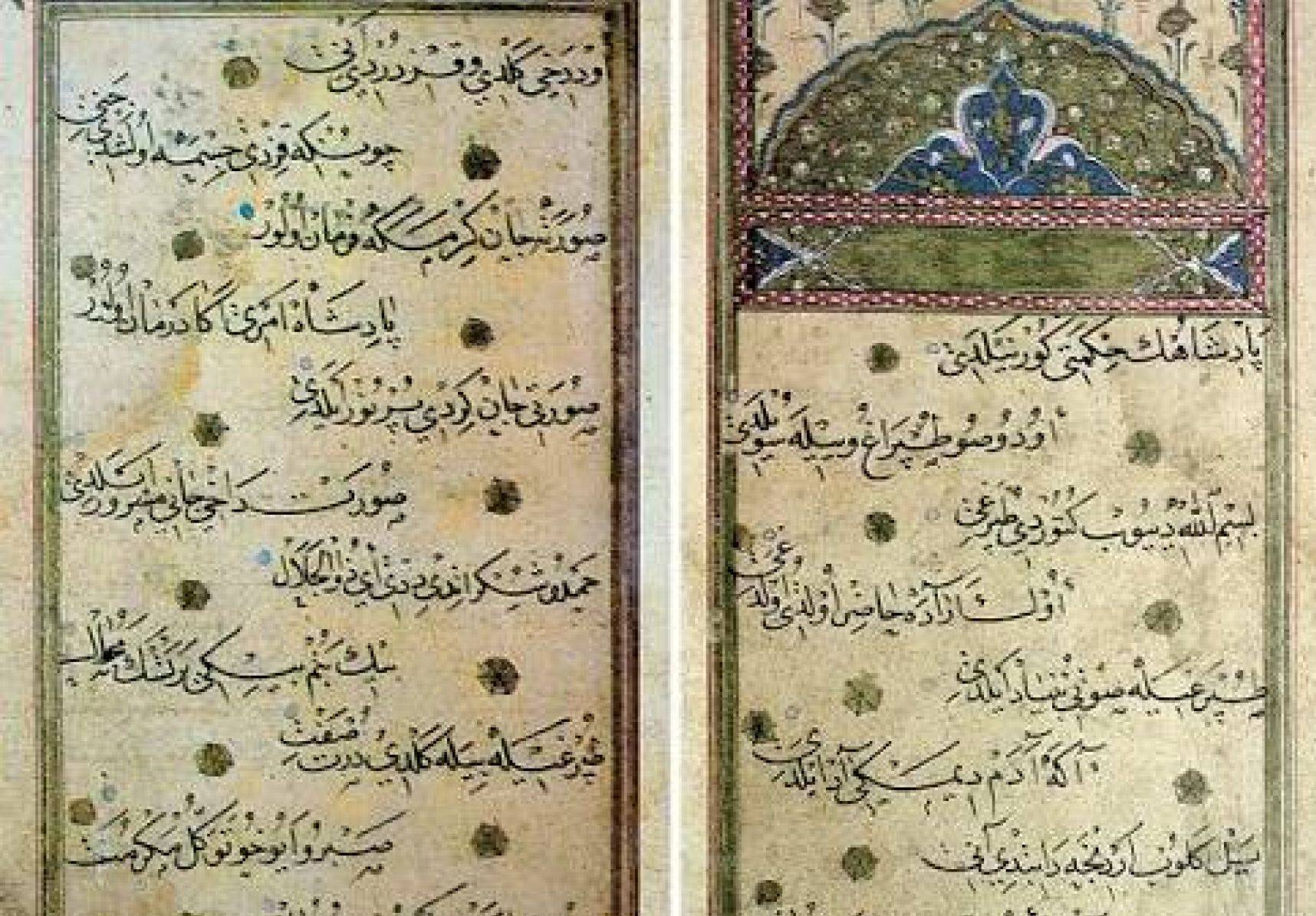
Yunus Emre was born sometime around 1240, most likely in the Anatolian heartland — the exact location remains unknown and the subject of affectionate dispute between several Turkish towns, each of which claims him as its own. He died around 1321. He was a follower of the great Sufi master Tapduk Emre, in whose service he is said to have spent years cutting and carrying wood from the mountains without complaint — a story that functions, in the tradition of Sufi hagiography, as an image of the patient, unremarkable, unglamorous inner work that spiritual formation actually requires.
What he left behind is a body of poetry in vernacular Old Anatolian Turkish — the living spoken language of ordinary people, not the literary Persian or Arabic of the court and the mosque — that is at once completely simple and inexhaustibly deep. This combination is vanishingly rare. It is the mark of someone who has gone so far into a truth that it has come out the other side as plainness.
His central themes are love, union, the transience of the world, the nearness of death, and the absolute sovereignty of the heart as the locus of divine encounter. He writes of the dost — the Friend, a Sufi name for the divine presence — with a directness and familiarity that never tips into irreverence. He writes of his own unworthiness with a humility that is not self-deprecation but precision. And he writes of love — always love — as the single sufficient response to existence.
I am not here for enmity. Love is my business, love is my work.
[Paraphrase of his spirit, not a direct quote.]
What makes Yunus Emre historically remarkable is his role in the formation of Turkish as a literary and spiritual language. In the 13th century, the educated and religious classes of Anatolia wrote in Persian and Arabic. Yunus chose Turkish — not as a concession to the uneducated, but as a spiritual act. The divine word, he was saying, belongs to every language. The Friend speaks to the heart in whatever tongue the heart beats in. This was a democratisation of spiritual expression that had profound and lasting consequences for Ottoman and Turkish culture.
His influence reaches everywhere. The tradition of ilahi — the Turkish sacred song — flows directly from his verse. The great Bektashi and Alevi communities have preserved and transmitted his poems as living devotional practice for seven centuries. And musicians working in the world music space — as I have been, in compositions like For True Lovers — find in his words a simplicity that is the hardest thing to achieve and the most necessary.
For those who wish to explore:
- The Drop That Became the Sea: Lyric Poems of Yunus Emre, translated by Kabir Helminski and Refik Algan — a beautiful rendering
- Yunus Emre and His Mystical Poetry, edited by Talat Halman — a fine scholarly introduction
- The City of the Heart: Yunus Emre's Verses of Wisdom and Love, translated by Süha Faiz
There is a quality in Yunus Emre's verse that I find almost impossible to describe without simply quoting it — which is precisely the quality that all the great sacred poets share. The words point directly at something that exists before and beyond the words. The finger pointing at the moon. And the moon, when Yunus points at it, seems closer than usual.
With love and reverence,
SY