Personality of the Month:
Rabia al-Adawiyya
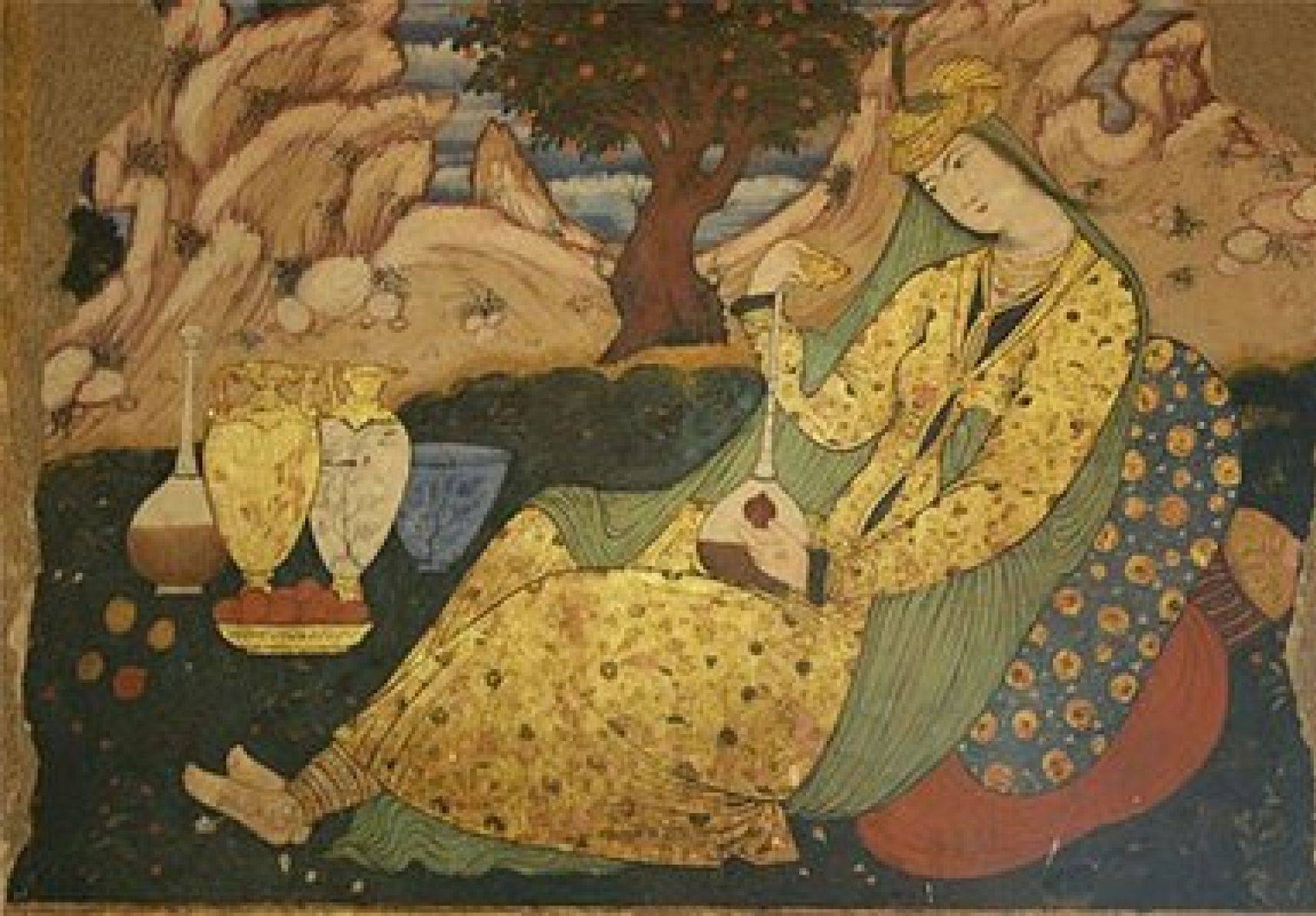
c. 714–801 CE
Rabia al-Adawiyya was born in Basra — in present-day Iraq — around 714 CE, into poverty, and, by some accounts, into slavery. She died in Jerusalem, or perhaps again in Basra, around 801 CE, having never written a systematic theological treatise, never led a school of jurisprudence, never commanded an army, and never held political power. She left behind a handful of prayers, a few poems, and a presence so vivid in the collective memory of Islam that her name has been invoked continuously for twelve centuries by mystics, scholars, poets, and ordinary believers.
What did she do? She loved. Completely. Without reservation. And she made of that love a metaphysical position of the highest rigour.
Her most famous formulation — which survives in several versions — runs roughly as follows: "O God, if I worship You out of fear of Hell, burn me in Hell. If I worship You out of desire for Paradise, exclude me from Paradise. But if I worship You for Your own sake, do not deny me Your eternal Beauty." This is not sentiment. It is the most precise possible statement of what the Sufis call hubb li-dhatih — love of God for God's own sake, entirely free from self-interest. It is the dismantling of the transactional relationship with the Divine that tends to dominate popular religiosity, and its replacement with something so pure that it borders on the terrifying.
In the history of comparative mysticism, Rabia stands at a fascinating convergence. Her understanding of love as the supreme path resonates directly with the bhakti tradition of Indian devotional mysticism — particularly the figure of Mirabai, the 16th-century Rajput poet-saint who abandoned everything for love of Krishna. It resonates with the Christian amor Dei — the love of God — as understood by Augustine, Bernard of Clairvaux, and later Eckhart. And it anticipates, with extraordinary precision, the mature Sufi understanding of love as the very fabric of existence — the view that Rumi would give its fullest poetic expression four centuries later.
What is often overlooked in accounts of Rabia is her intellectual rigour. She was not a passive, swooning mystic. She was a formidably clear thinker who consistently refused the consolations that conventional religiosity offered. The story of her reportedly being seen running through the streets of Basra carrying a torch and a bucket of water — the torch to burn Paradise, the bucket to douse Hell, so that humans might love God for God alone — is almost certainly legendary. But legends survive because they carry a truth that biography cannot. The truth here is exact: the moment love is conditioned by reward or fear, it ceases to be love. Rabia understood this with a clarity that has never been bettered.
She is also, it must be said, a figure of enormous significance for the history of women in Islamic spiritual life. In an age and culture that offered women very limited public roles, Rabia attracted male disciples of great learning, was sought out for counsel by the leading religious figures of her day, and was recognised, even by those who might have been expected to dismiss her, as possessing a spiritual authority that transcended gender. She neither campaigned for this recognition nor, apparently, needed it. She was simply what she was. And what she was could not be ignored.
For those who wish to explore her life and legacy:
- Margaret Smith, Rabia the Mystic and Her Fellow-Saints in Islam — the foundational scholarly study
- Farid al-Din Attar's account of Rabia in Tadhkirat al-Awliya (Memorial of the Saints) — the most influential early source
- Seyyed Hossein Nasr, Islamic Art and Spirituality — situates her within the broader spiritual landscape
- Annemarie Schimmel, Mystical Dimensions of Islam — essential reading for anyone wishing to understand the full arc of Sufi thought and its feminine dimension
One of her prayers has stayed with me for years:
"My God, the stars are shining and the eyes of men are closed. Kings have shut their doors and every lover is alone with his beloved. And here am I alone with You."
It is simultaneously a prayer, a poem, a metaphysical statement, and a love letter. Rabia did not distinguish between these things. Neither, I think, should we.
With love and reverence,
SY