Personality of the Month:
Martin Lings
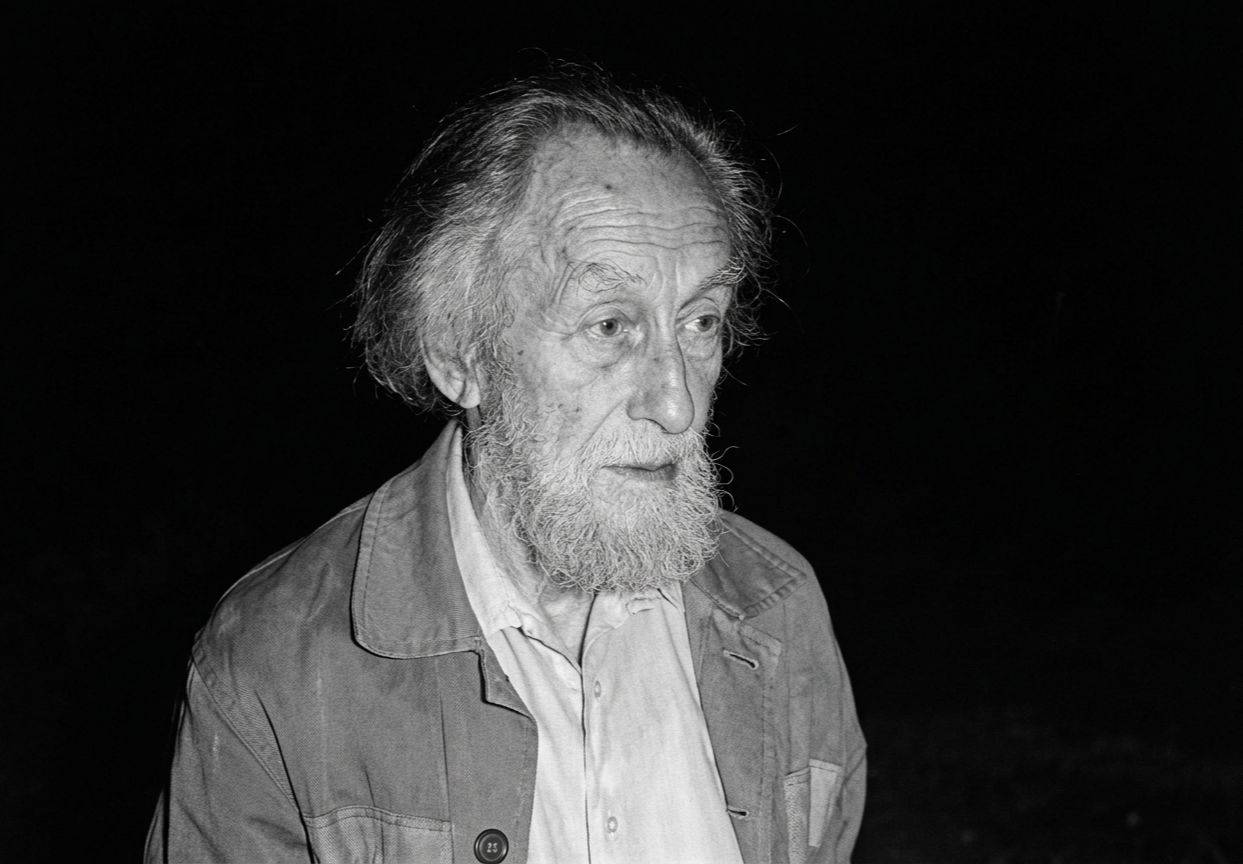
1909–2005
Martin Lings was one of the towering intellectual and spiritual figures of the twentieth century, and someone for whom I hold immense love, reverence, and personal gratitude. He was not merely a scholar, nor simply a writer or historian. He was a man who lived tradition inwardly and outwardly, with remarkable integrity and quiet authority.
Born in 1909, Martin Lings was educated at Oxford and went on to become one of the most important voices associated with the perennial philosophy and the preservation of traditional wisdom. He was deeply influenced by René Guénon and later became a close disciple of Frithjof Schuon. Yet what distinguished Lings was his ability to combine rigorous intellect with a luminous spiritual sensitivity. His presence on the page, much like his presence in life, was gentle, precise, and profoundly elevating.
Many know Martin Lings as the author of what is widely regarded as the most beautiful and spiritually faithful biography of the Prophet Muhammad ever written in the English language. Muhammad His Life Based on the Earliest Sources is not merely a historical account. It is a work of reverence, restraint, and deep inward seeing. To read it is to feel that the author knew when to speak and when to remain silent, when to illuminate and when to step aside.
What few people realise is that Lings also served for many years as Keeper of Oriental Manuscripts at the British Museum and later the British Library. He was entrusted with some of the most precious texts of the Islamic world, not merely as an academic custodian, but as someone who understood their inner life and sacred context. He approached manuscripts not as objects, but as living vessels of meaning.
On a more personal level, Martin Lings embodied something increasingly rare in our time. A complete absence of ego. There was no desire to impress, no need to dominate conversations, no urge to be seen as an authority. His authority came precisely from his humility and alignment with truth. He understood that intelligence in its true sense is not cleverness, but illumination. Not accumulation, but remembrance.
For those wishing to explore his work, I would especially recommend:
- Muhammad His Life Based on the Earliest Sources
- Symbol and Archetype
- The Eleventh Hour
- Ancient Beliefs and Modern Superstitions
Each of these books carries a different facet of his vision, yet all are rooted in the same centre. A profound fidelity to truth, tradition, and the sacred order of things.
Martin Lings was a bridge between worlds. Between East and West. Between scholarship and sanctity. Between language and silence. Figures like him remind us that tradition is not nostalgia. It is presence. It is continuity. It is responsibility.
May his legacy continue to guide those who seek depth over noise, wisdom over opinion, and truth over novelty.
With love and prayers,
SY