Personality of the Month:
Ananda Coomaraswamy
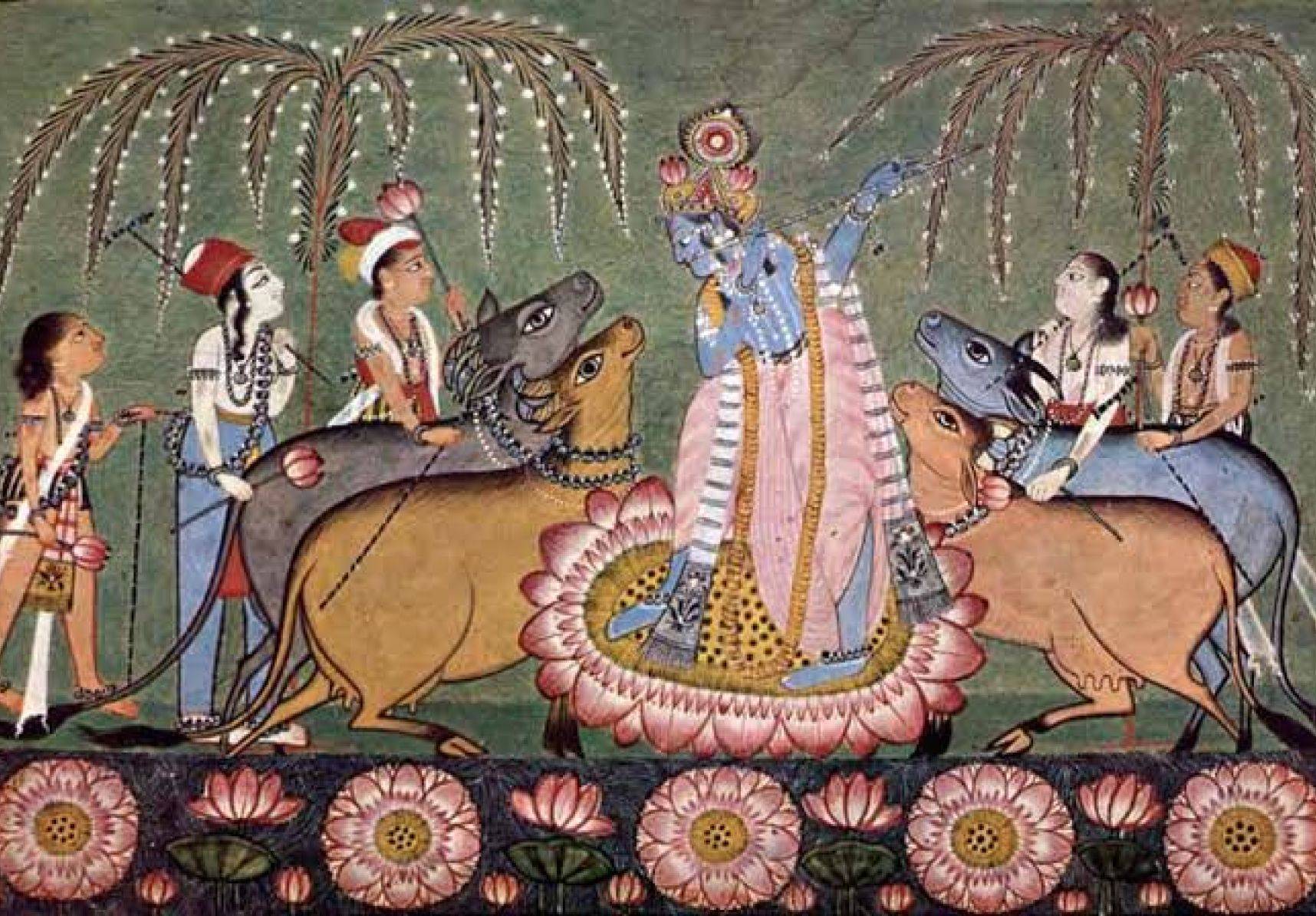
1877–1947
Ananda Kentish Coomaraswamy was born in Colombo, Ceylon — present-day Sri Lanka — in 1877, to a Ceylonese Tamil father and an English mother. He died in Needham, Massachusetts, in 1947, having spent the final decades of his life at the Boston Museum of Fine Arts, where he served as Keeper of Indian and Muslim Art and produced a body of philosophical and art-historical scholarship that remains, nearly eighty years later, without peer in its field.
He was, by any measure, a figure of extraordinary range. He trained as a geologist. He taught himself Sanskrit, Pali, and classical Tamil. He mastered the iconographic traditions of Hindu, Buddhist, and Islamic art. He engaged with the Neoplatonic tradition, with Eckhart, with Dante, with the scholastic metaphysics of Aquinas, and with the philosophy of art from Plato to the present. And from all of this, he distilled a single, unified vision: that the great art of the world's sacred traditions is not culturally specific decoration, but the visible expression of a metaphysical understanding that is, at its core, one and the same across all traditions.
This is the Perennial Philosophy as applied to aesthetics — and Coomaraswamy was its most rigorous and most erudite exponent.
His central argument, developed across dozens of essays and several major books, is that the distinction we make in the modern West between art and craft, between fine art and applied art, between aesthetic experience and religious experience, is not a mark of sophistication but of poverty. In the great sacred traditions — whether Hindu, Buddhist, Islamic, medieval Christian, or indigenous American — no such distinction existed. The craftsman who carved a temple pillar was not an artist expressing himself. He was a practitioner performing a sacred function, transmitting a metaphysical truth in the language appropriate to his material and his skill. Beauty, in this understanding, is not subjective. It is the accurate expression of truth in form.
For those of us who work in music — or in any art rooted in tradition — the implications are serious. If Coomaraswamy is right, and I believe he is, then the measure of a work of art is not its originality, its novelty, or its self-expression. It is its fidelity — its faithfulness to the truth it is attempting to embody. This does not mean that tradition is rigid or that innovation is forbidden. It means that innovation which loses contact with the metaphysical root of a tradition is not an advance but a diminishment.
His book The Transformation of Nature in Art — in which he draws precise parallels between the aesthetic theory of Meister Eckhart and the classical Indian understanding of artistic creation — is one of the most important comparative texts in existence. His Christian and Oriental Philosophy of Art is a brilliant, compressed argument for the unity of sacred aesthetics across traditions. And his essay What is Civilisation? is as relevant — and as uncomfortable — today as the day it was written.
He is not always easy to read. He assumes fluency in Sanskrit terminology, in Scholastic philosophy, and in classical Greek thought. But the effort is repaid many times over. There are sentences in Coomaraswamy that one reads and then puts the book down — not from exhaustion, but because the sentence requires time to settle into.
For those who wish to begin:
- The Transformation of Nature in Art — the essential starting point for anyone interested in sacred aesthetics
- Christian and Oriental Philosophy of Art — a masterwork of comparative thought
- Time and Eternity — a metaphysical essay of great depth and beauty
- Selected Papers, edited by Roger Lipsey — the best single-volume introduction to his full range
Coomaraswamy reminds us that beauty is not what we feel when something pleases us. Beauty is what we perceive when a form accurately expresses a truth that transcends it. And if that is so, then the making of true art is not self-expression. It is self-offering.
With love and reverence,
SY