
Personality of the Month:
Herbert von Karajan
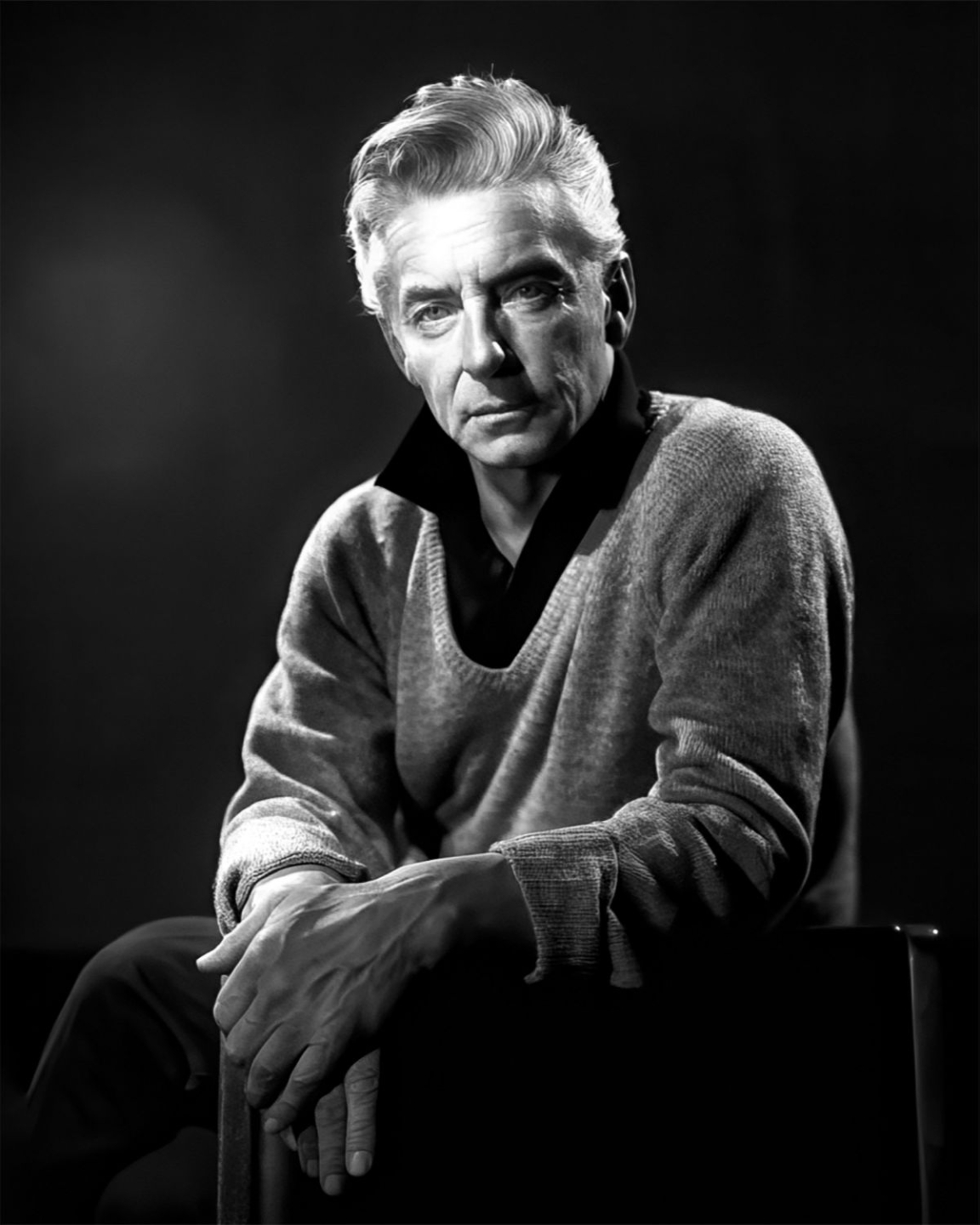
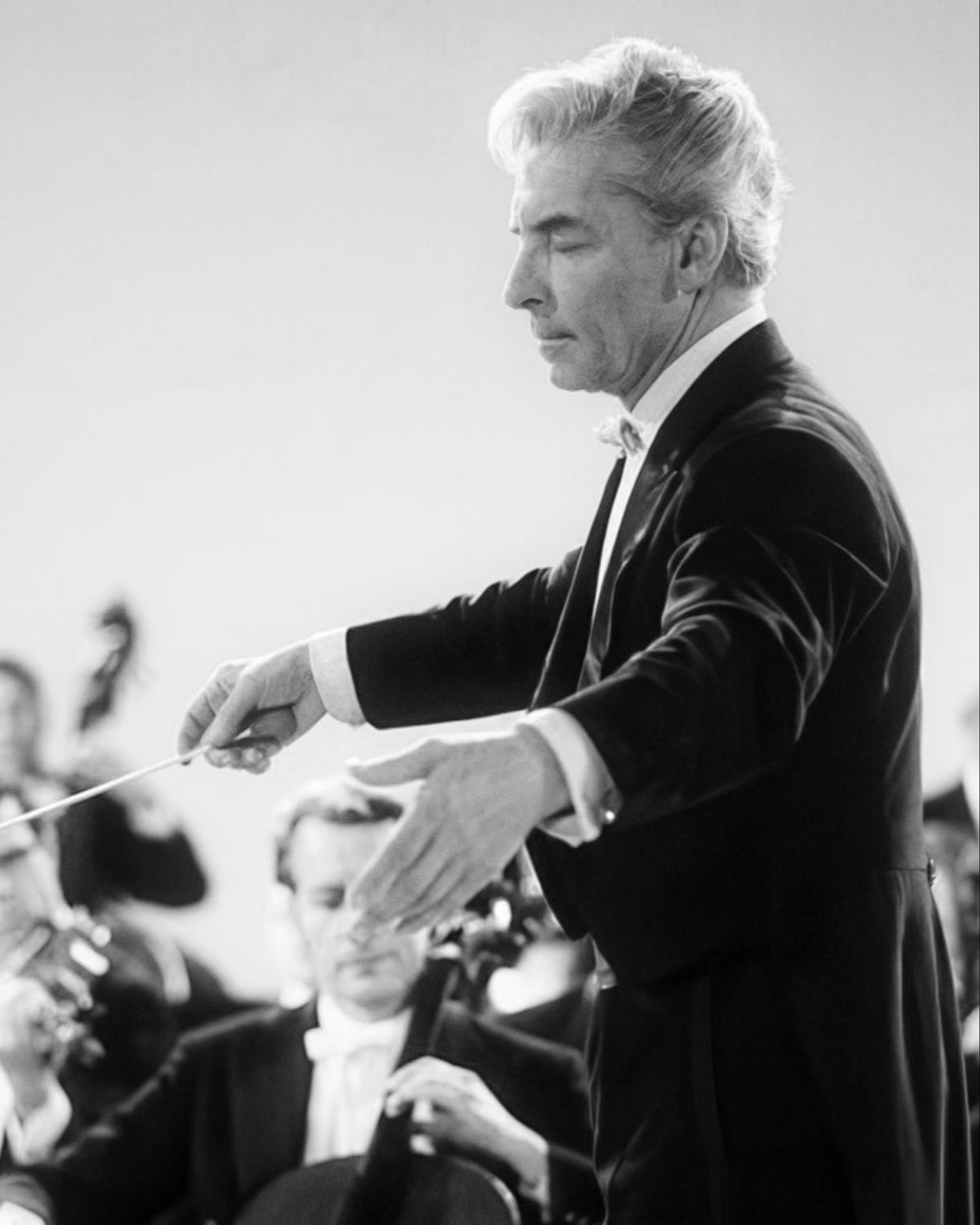
Herbert von Karajan holds a very particular place in my own musical journey. Long before I had the words to articulate what I was hearing, his recordings opened a door for me into the world of Western classical music. As a teenager growing up in London, I owned several vinyl records of his performances. They were among my earliest encounters with orchestral sound as something vast, architectural, and deeply psychological.
Karajan was not merely a conductor in the conventional sense. He approached music as a total inner vision. He was famously obsessed with sound itself, with texture, balance, colour, and flow. He often conducted with his eyes closed, not as a theatrical gesture, but because he believed music should be shaped from within, rather than imposed externally. He once said that the ideal performance should feel as though it unfolds by itself.
This inward orientation is what continues to fascinate me. Despite his reputation for control and perfectionism, Karajan was deeply concerned with transcendence. He sought an almost metaphysical unity between orchestra, score, and listener. His performances aimed not merely to interpret the music, but to dissolve the boundary between sound and silence, movement and stillness.
Few people realise how deeply philosophical his approach was. Karajan believed that music could reveal truths beyond language. He was particularly drawn to the symphonic worlds of Beethoven, Bruckner, and Wagner, composers who themselves wrestled with questions of destiny, order, freedom, and the infinite. His Bruckner in particular carries a sense of vast spiritual architecture, as though one were walking through sound rather than listening to it.
Karajan was also a pioneer in technology. He embraced recording, film, and later digital sound not as commercial tools, but as extensions of the musical experience. He believed that capturing sound with care and precision could allow music to reach people in a more intimate and lasting way. In this sense, he helped shape how entire generations encountered classical music.
Of course, his life was not without controversy. He was a complex and at times difficult personality. Yet complexity is often the price of singular vision. What remains undeniable is the depth of his commitment to music as a serious and transformative art form. He demanded absolute devotion from himself and from those around him.
For me, Karajan represents a bridge. A bridge between discipline and ecstasy, structure and surrender, intellect and intuition. His work reminds us that mastery is not about display, but about disappearing into the work itself.
I recently came across this documentary which offers a sensitive glimpse into his life and inner world. I think many of you will find it illuminating.
Click here to watch now.
I hope you enjoy spending time with his music, and perhaps listening again with fresh ears.
With love
SY